Designing an advisor-led onboarding experience for digital investing. Bridging legacy advisor tooling with a modern, SigFig-powered investment experience while holding compliance and trust intact.
Advisors were guiding clients into investments through dense legacy tooling, stitched together step by step.
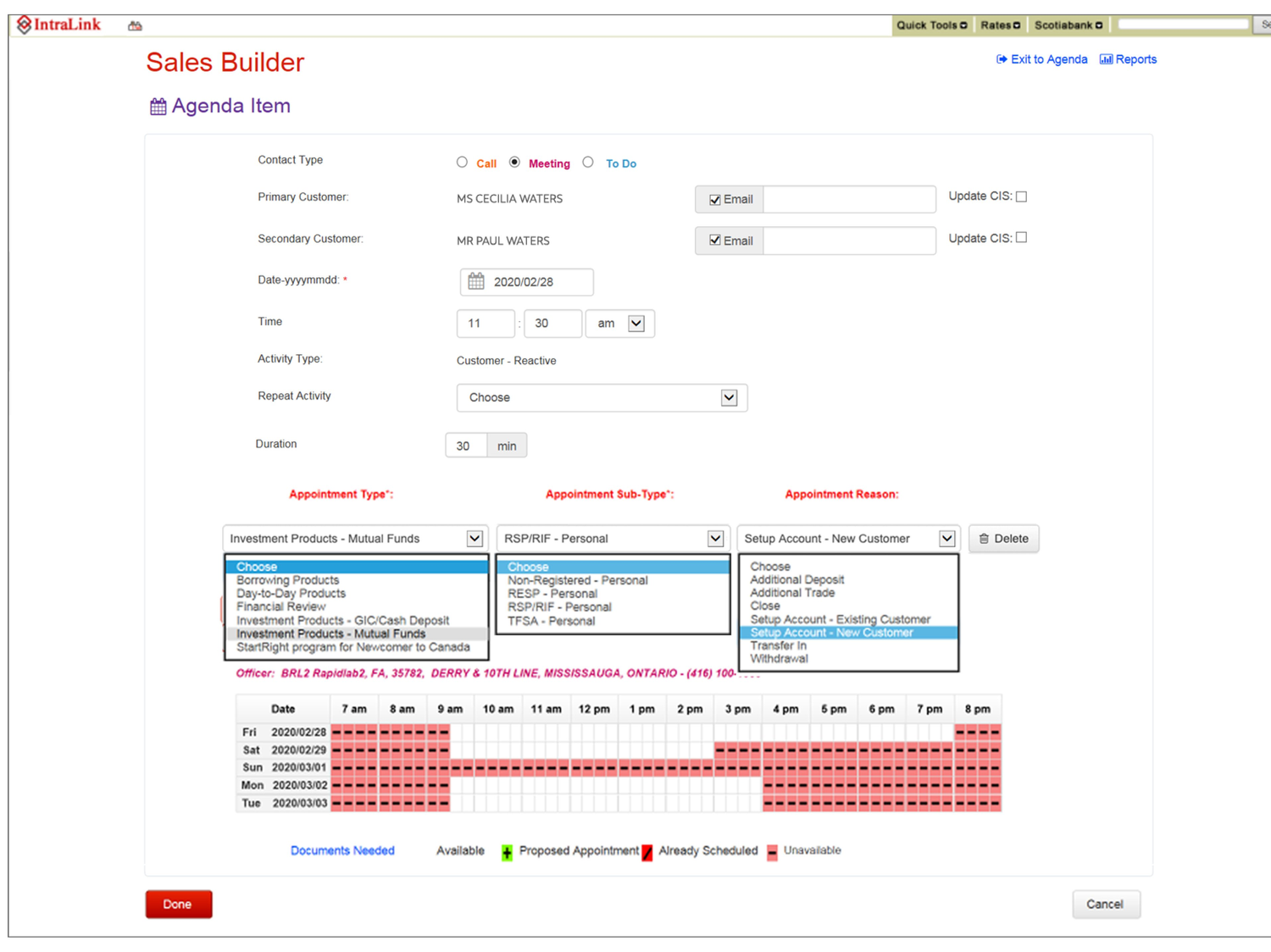
Booking an appointment, reviewing a client, and setting up an investment lived across separate systems, each carrying its own regulatory requirements, suitability rules, and recommendation logic. The work got done, but the experience asked the advisor to hold the complexity in their head rather than letting the platform carry it.
The starting point. The legacy Sales Builder appointment flow: nested dropdowns for appointment type, sub-type, and reason, plus an availability grid, all on one dense screen.
Facilitated working sessions with advisors and stakeholders to surface real workflow pain points.
Mapped the advisor and investor workflows end to end to find where effort collected.
Defined streamlined onboarding flows that kept compliance integrated rather than bolted on.
Produced wireframes and high-fidelity prototypes to make the future-state experience tangible.
Tested flows with stakeholders to pressure-test decisions before design moved into build.
Less time navigating multiple systems, more time with the client in front of them.
Recommendations had to feel understandable and trustworthy, not opaque outputs.
Regulatory requirements had to stay woven into the workflow, never an afterthought.
Collapse repetitive steps and remove system-hopping.
Put the right context where the decision is made.
Turn suitability into confident, guided steps.
Make recommendations easy to explain and discuss.
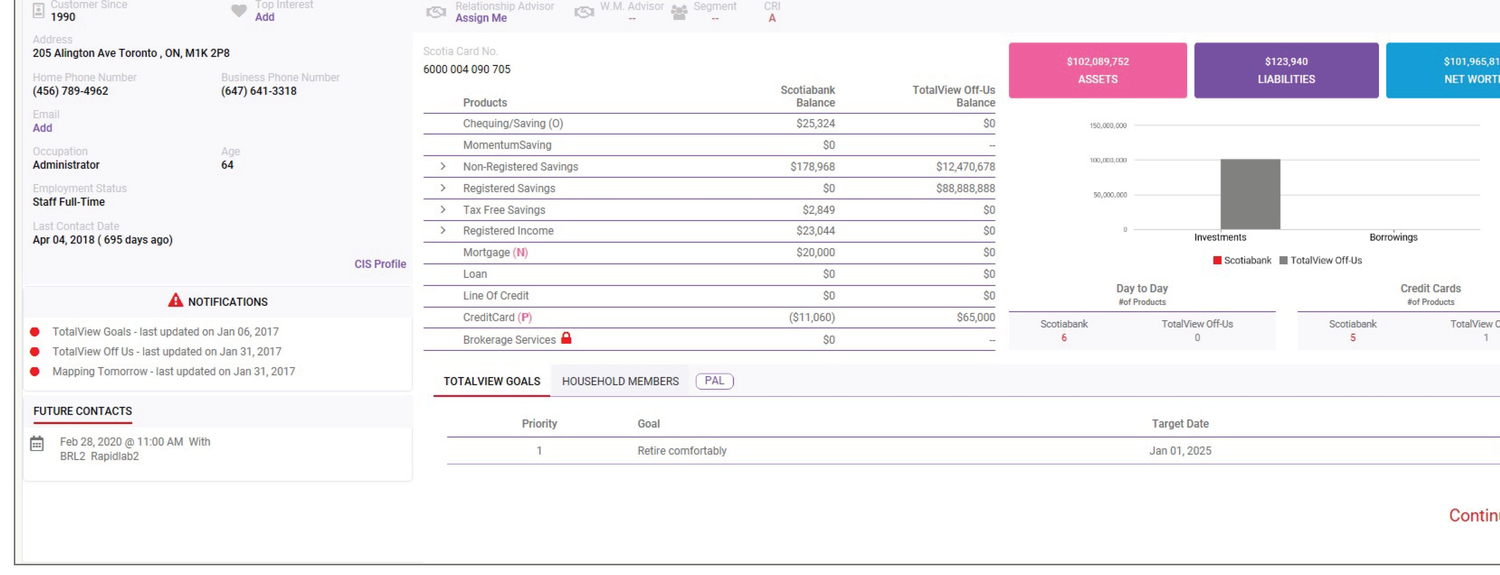
A consolidated profile brings the client's holdings, goals, and household into one view, with SigFig data populated alongside Scotiabank products. The advisor starts from a clear, shared picture instead of assembling it by hand.
SigFig populates here. Assets, liabilities, net worth, and goal targets sit next to the existing product table.
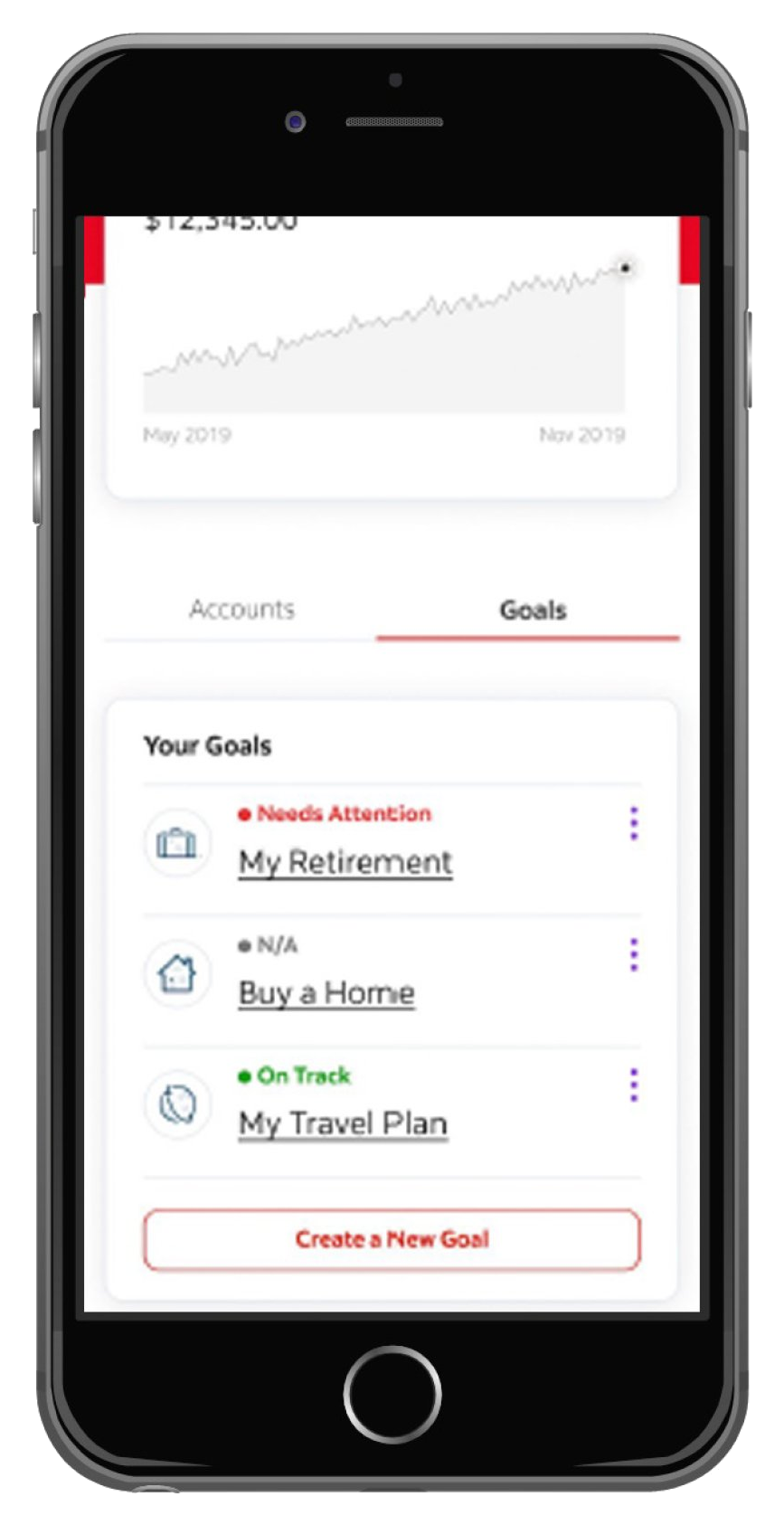
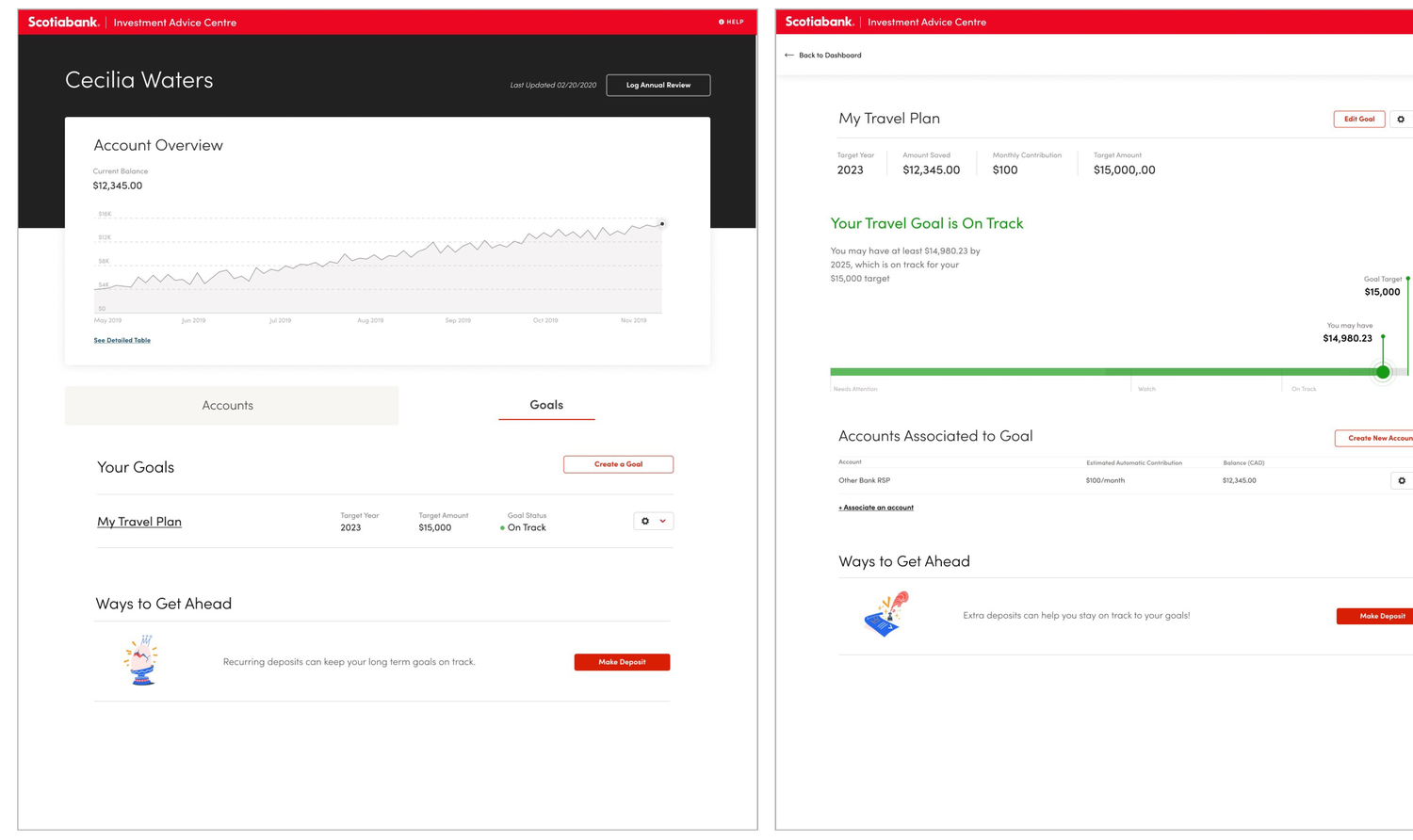
Recommendations made to be discussed. A goal shows progress against target on a plain on-track scale the advisor can walk through with the client.
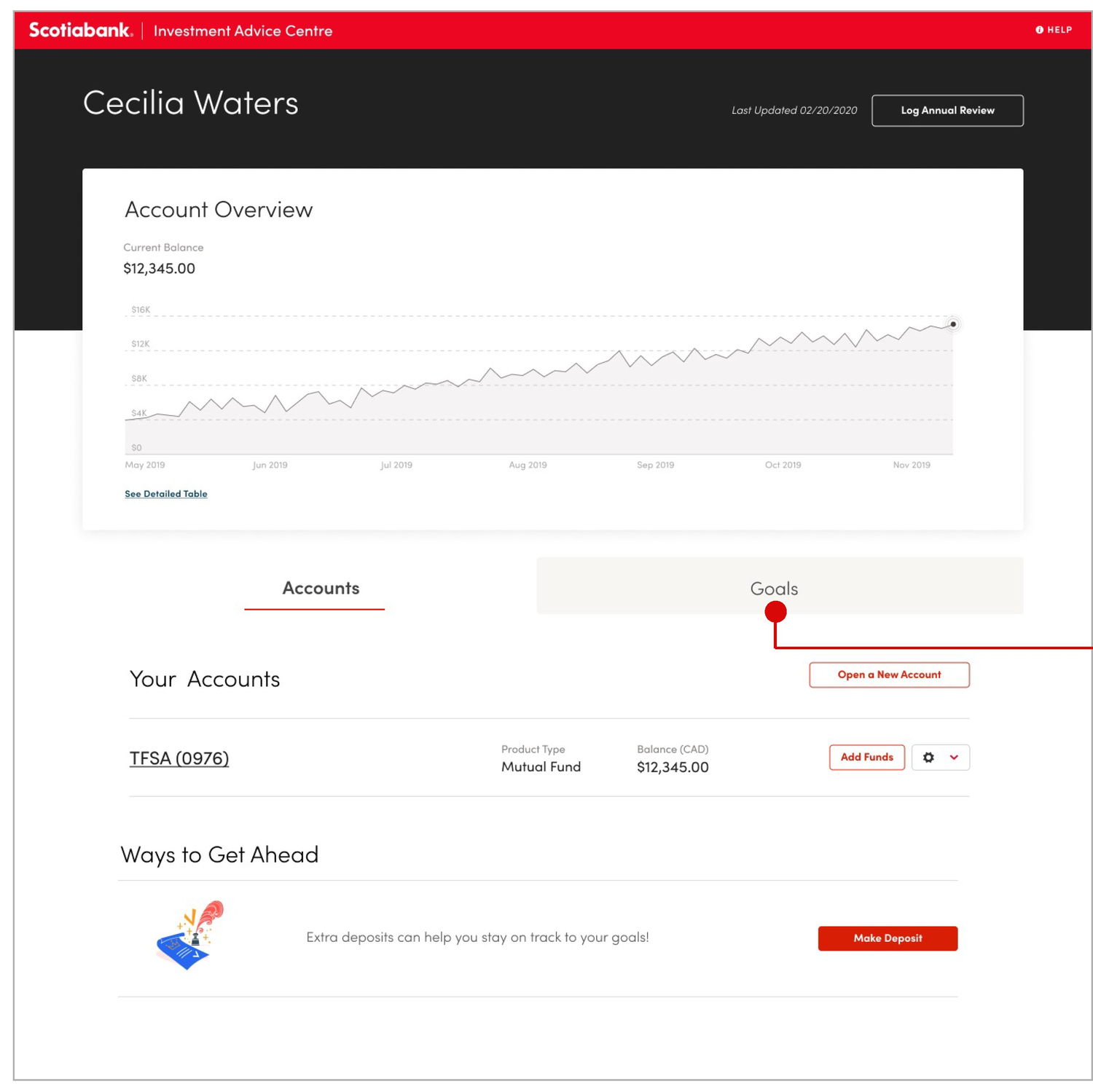
The Investment Advice Centre gives accounts and goals a single, legible surface. Balances, performance, and goal status read at a glance, and suitability stays visible rather than buried in a separate step.
The contribution step consolidates the decision into a single review before submission, with the suitability and borrowing-to-invest acknowledgment built directly into the flow rather than handled off to the side.
Compliance, in the flow. The risk-of-borrowing acknowledgment is part of the funding step, not a separate gate.
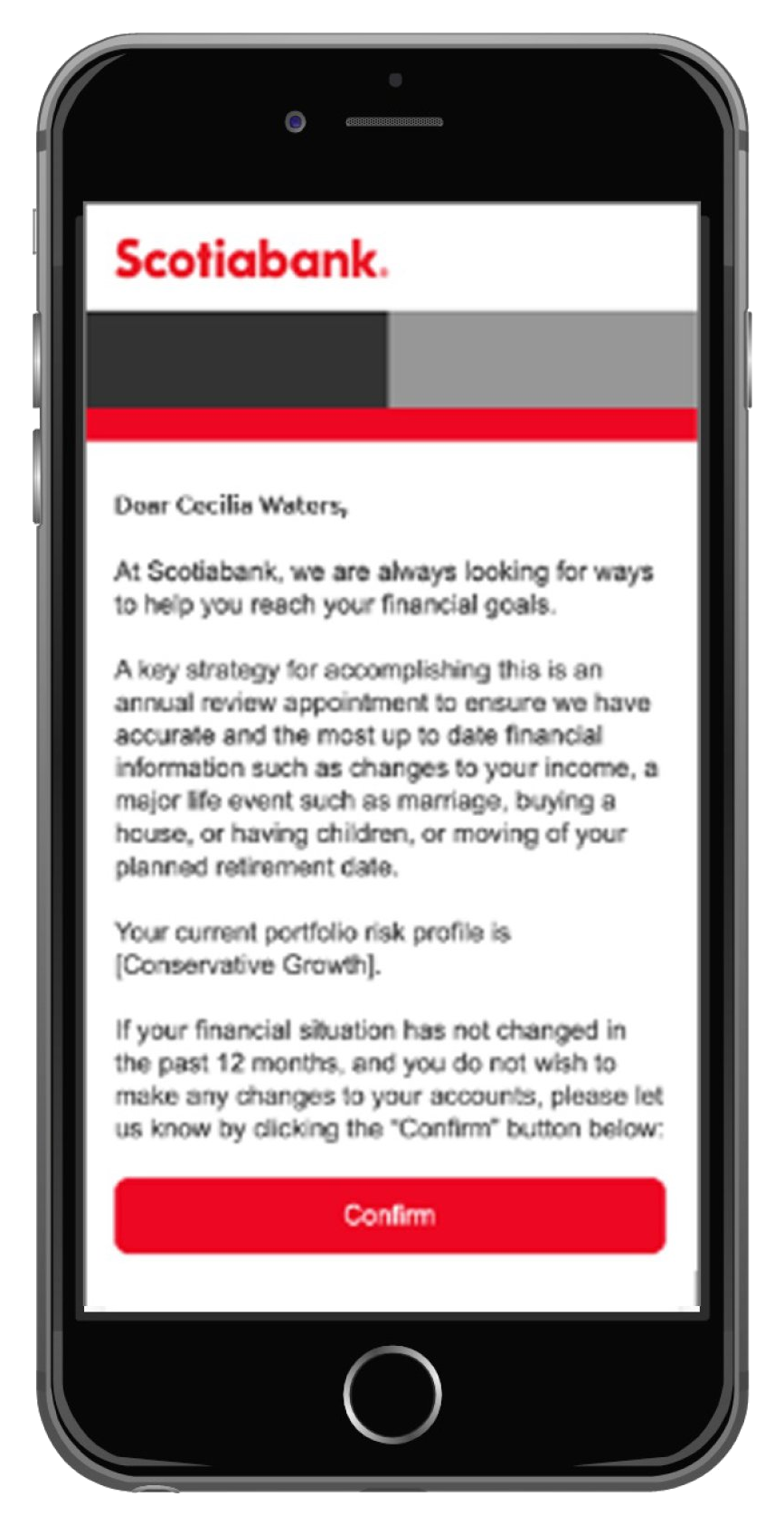
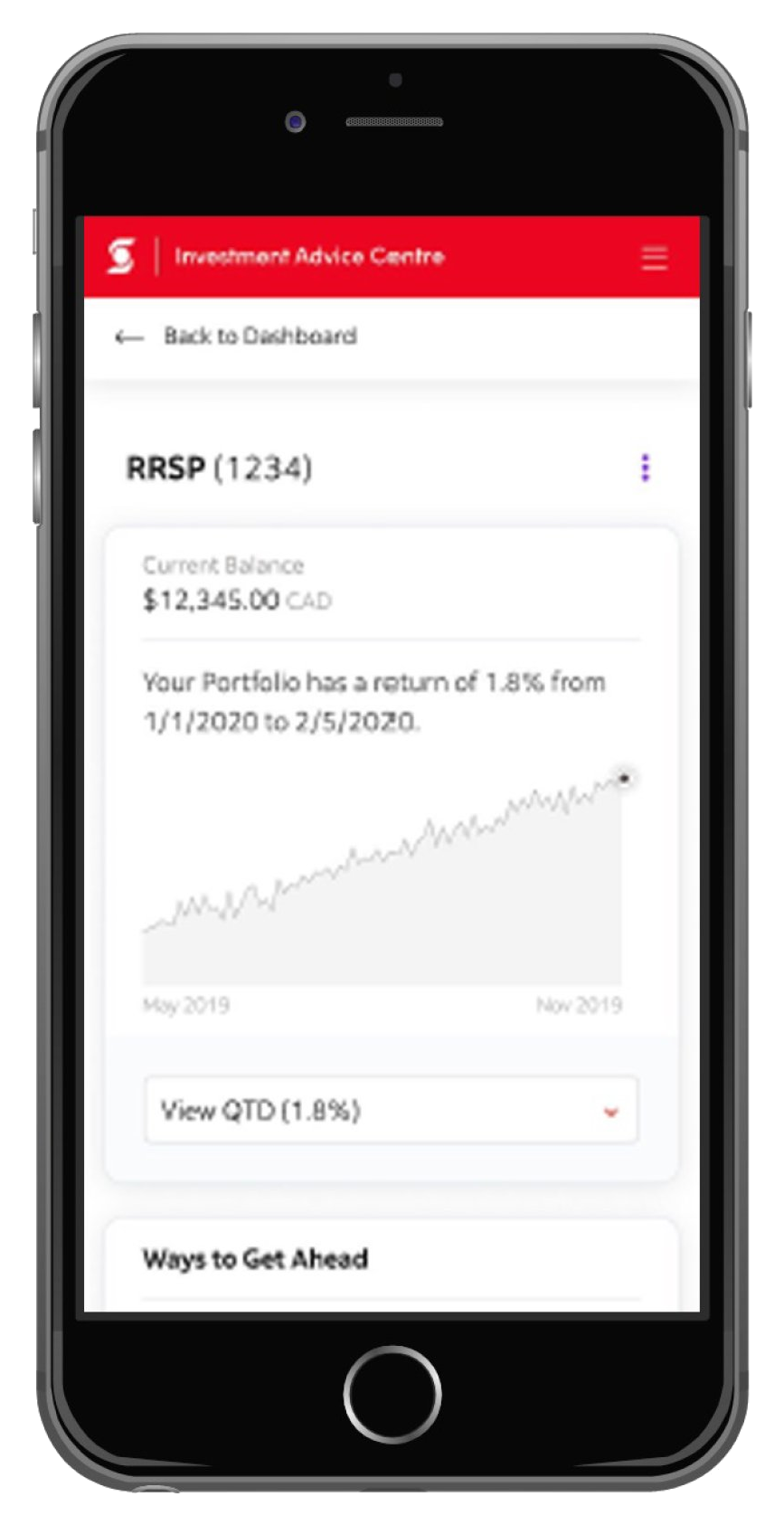
The experience carried past the advisor's desk. Clients could confirm an annual review, follow account performance, and track goals from mobile.


Workshops brought the people who shape an investment experience into one room, before a single screen was committed to.
These sessions helped uncover workflow pain points, align priorities across functions, and validate the future-state experience before design execution began.
Let the platform hold the complexity, not the advisor.
Break hard choices into confident, sequenced steps.
Make every recommendation explainable.
Keep regulatory requirements native to the flow.
Streamlined advisor onboarding workflows.
Improved visibility of investment recommendations.
Reduced complexity across onboarding steps.
A foundation for scalable advisor experiences.
Looking at the same problem today, the guided structure becomes a natural surface for intelligence that helps advisors without taking the decision out of their hands.
Surface investment guidance in context, as a second opinion.
Adapt the onboarding path to the client profile.
Give advisors timely, relevant client signals.
Explain each recommendation as it is made.